MAURITIUS MAG: History, Society, Culture & People of Mauritius

MAURITIUS MAG

A Triangular Perspective on the Chagos Issue


A Triangular Perspective on the Chagos Issue

picture: courtesy of www.chagos.info

Let’s look at the Chagos archipelago issue from a new angle.  Perhaps the question we should be asking ourselves is whose interests this whole charade has served best? As things stand the real winners out of the sorry saga are most likely to be the law firms who stand to pocket the lion’s share of any further compensation awarded. If we are indeed all Chagossians, as some say, then it will be the lawyers who turn out to be the most ‘Chagossian’ of us all!  That is surely not the best outcome.

We should instead be thinking outside the box. There are at least three diverging views on this issue: Vencatassin has already proclaimed himself the President in exile of Chagos or Diego Garcia. He represents a group of Chagossians who have voted with their feet and mostly chosen to leave Mauritius – which has done precious little for them over recent decades. Many of them have taken up the offer to reside in Britain.

Then there is the group of Chagossians under the leadership of Bancoult. They tend to accept the notion that the archipelago should revert to Mauritian sovereignty and have been instrumental in fighting their case through the courts.

Thirdly there are the Chagossians, like Fernand Mandarin, who take a more pragmatic and sceptical approach.  They are wary of trusting either the British or Mauritian governments, and are looking for a solution which is the best and most just for those directly involved in the expulsion and their descendants.

We, as Mauritians, have a special duty to ask ourselves which group most deserves our support, and why. Are we really sure that the Mauritian government is the best custodian of the islands and would manage them in the best interests of the Chagossians? If we look at our history, and indeed at the way our political elite operates today, we have good cause to be doubtful. The records show quite clearly that the Mauritian politicians showed scant regard for the ilois in the 1960s during the pre-independence negotiations. Nor have their sons and successors revealed any great concern for either the ilois or other marginalized groups in Mauritius in the post-independence era. Who has been enriched by tourist income? Not the masses, including the Chagossians, who still live in the cités, not the squatters turned off their lands in the suburbs of Port Louis or in Rivière Noire when the developers want to move in.  Do we have politicians today in Mauritius whom we believe to be true idealists, wanting to serve the nation, or a bunch of fils-à-papa who accede to power on the basis of a family name rather than on merit, who allow the police to routinely beat up detainees and who engage in blatantly corrupt practices? We need to deal with political dead wood at home and be confident that we have the government we deserve before we try to manage additional territories.

Finally we need to look at the economic realities of a future ‘Chagos for the Chagossians’. Once the base is gone, and the way is cleared for those who wish to return, this can only happen if there is a viable social and economic infrastructure. If left to our present political elite, who can confidently assert that we will not end up seeing the ilois serving as the lackeys of some Asian hotel chain or industry as is the fate of our working classes today?

So let’s not allow blinkered nationalism to sway our judgement. Let’s find out what vision Vencatassin, Mandarin, Bancoult and other spokespersons for the Chagossians are each offering, and judge them on their merits. And let’s not assume that the marine reserve idea is merely a smokescreen. Perhaps, indeed, it would be no bad result to see Chagos managed not by an individual government but by an international group of scientists and intellectuals committed to preserving the unique natural and cultural heritage of these islands. And, we should remember that if, a long time ago, the Mauritian government had argued for the setting up of a viable Trust Fund for the ilois, the millions of dollars, pounds and rupees spent on legal wrangling could have provided a lifestyle and a future which would have been and still could be immeasurably better for the erstwhile residents of that troubled archipelago.

————————————————————————————————————————————————————–

© ccuniah


From Mauritius to Australia:Samson Peersahib and his descendants

From Mauritius to Australia:

Samson Peersahib and his descendants

Undertaking family research in Mauritius is complicated by the fact that different types of immigrants were registered in various ways, according to long-forgotten categories, and the records held in a number of places. Hence, if one is not sure of the status of an ancestor, one has several options to consider. In the case of ancestors of Asian origin, for example, there was a distinction made between persons paying for their own ship fare, who were known as passengers, and those who were assisted, usually indentured immigrants. The arrivals of passenger immigrants were recorded in a series of ship registers which can be consulted at the Mauritius Archives. This collection is not indexed, and if one does not know the exact date of arrival in Mauritius, the search can be very time consuming. Indentured immigrant arrival records are held in a separate archive at the Mahatma Gandhi Institute which is not presently operating as an open public resource.

Descendants of Samson Peersahib and Miriam Thomas are currently trying to trace their ancestors and have come across a civil status certificate for Samson which bears the number 358,633. Such six figure numbers written next to a name on a birth or death certificate, usually indicate that the individual concerned had arrived from India and was classed as an indentured immigrant. This is good news for the genealogist, since the records for indentured workers were much more detailed than those of passengers and can provide details of the ancestor’s age, birth place, religion, and other useful information, sometimes including  employment history and a date of return to India or death, and, if you are lucky, a photograph, and details of accompanying family members.

In the case of the Peersahib number, this corresponds with the immigration register for the ship John Allan which came from Madras. The ship arrived in Mauritius on 1st August 1872. In order to obtain this information a request must be made in writing or in person at the Mahatma Gandhi Institute.

However, it sometimes occurs that immigrants made more than one trip to India, and the number associated with the ancestor may therefore not indicate their earliest date of arrival in India. This seems to be the case with Samson Peersahib, since from other information, the family believe that a son was born to Samson and his wife Miriam Esther Thomas in 1859 at Moka, Mauritius. The son was named Shadrach.

The family research indicates that Samson and Miriam were Anglicans, and persons of some importance in that community, as demonstrated by an elaborate tombstone in the churchyard:

Such a stone would not have been within the means of an ordinary labouring family in late 19th century Mauritius. Indeed, other records indicate that the Peersahib family worked as government interpreters [presumably translating from Tamil to English] and that they were respected members of the Anglican community.

However the tombstone records the death of a youthful Samson on 31 January 1875. Since the birth date reads 19 July 1861 he would have been 14 years old. Perhaps the stone belongs to a son of Samson, with the same names as his father. Alternatively, the dates may reflect an error of the engraver [not uncommon in Mauritius] or an erroneous reading as a result of weathering.

The genealogical research is complicated further by the fact that Samson and his children had several Christian names and did not always seem to use their first names [it is in fact common amongst the Catholic community in Mauritius to use the second Christian name, rather than the first]. Therefore, the descendants are having difficulty deciding whether a known interpreter named James Peersahib, is in fact Shadrach James Thomas Peersahib, the son of Samson.

The family believe that after the death of his mother, perhaps related to his father’s quick remarriage, Shadrach James Thomas Peersahib decided to leave the island when he was aged around 16 or 17, and settled in Australia.  They have constructed the following family tree based on the evidence already collected:

If anyone is related to the Mauritius or Australia branches of the Peersahib and Thomas families and has further information to share, please contact us at info@mauritiusmag.com.

—————————————————————————————————————————————————————–

© Mauritius Mag


The Lagesse Family Name in Mauritius

The Lagesse Family Name in Mauritius

A numerous family today in Mauritius and with members scattered in various parts of the world, the Mauritius branch of the Lagesse family are all descended from Antoine Lagesse, originally from Troyes, in Champagne, France. According to the Dictionary of Mauritian Biography, Antoine was born in 1733 and enlisted at Brittany in the Bombardier company of the Isle of France legion in 1766. He arrived in Mauritius in August 1767 and was employed in the armoury. After a serious illness he was given a pension of 600 livres [French pounds] a year. He was by now a family man, having married Marie Catherine Fleuriot in 1774. Together they had 7 children, thus founding the Lagesse dynasty on the island.

Antoine purchased land at Rivière Sèche, in the region of Flacq, and by the time of his death in 1798 possessed a large estate there where he cultivated crops, raised livestock, and distilled cane liquor known as arrack. The estate employed 117 slaves and was effectively self-sufficient, with its own carpentry workshop and blacksmith’s forge.

Like many prominent French families, the Lagesses have researched their ancestry and have produced an attractive publication about Antoine, his life and descendants. Included is a re-creation of the family residence in Flacq, by Pierre Lagesse, based on the detailed notarial records drawn up at the time of Antoine’s death. It offers a fascinating glimpse of the lost world of the 18th century French settlers in Mauritius:

Recreation of Antoine’s Flacq residence, by Pierre Lagesse


When Antoine died he was buried in the local cemetery of St Julien, Flacq, a picturesque location and one steeped in history. The tombstone of Antoine which lies alongside that of his wife, beautifully engraved, can still be seen today:

Tombstone of Antoine

St Julien church, Flacq

Among the descendants on Mauritius are many illustrious figures. We may mention here the recently deceased Marcelle Lagesse, author of numerous works of fiction and non-fiction whose imagination and sense of history have enriched the lives of all who seek to understand the fascinating past and rich present of the complex and fascinating island of Mauritius.

—————————————————————————————————————————————————————–

Text © mauritiusmag.com

Sources: Antoine Lagesse 1733-1798 et ses Descendants à l’isle de France, MSM, 1998

Dictionnaire de Biographie Mauricienne, pp 1459-60


Exposition Mail Art

Chers compatriotes de Maurice et d’outre-mer, amis et passionnés des Arts,
Cette lettre vous surprendra peut-être, mais le Blue Penny Museum, à l’occasion de ses dix ans d’existence, se devait de proposer une manifestation d’Art populaire d’envergure autour d’un patrimoine local mondialement célèbre, nos deux fameux timbres “Post Office”, Blue et Red Vermilion.
En fait, ces deux joyaux, admirés par tous les collectionneurs du Monde entier, offrent tous les jours une visibilité incroyable à notre pays et cela, à notre insu. Sur deux centimètres carrés, ils nous donnent à voir aussi bien trois siècles de gravure européenne qu’un condensé historique et symbolique de notre passé colonial.
La philatélie est plus populaire sur la planète que le football amateur… Rien qu’en Chine, selon la célèbre firme Stanley & Gibbons, on compte 60 millions de philatélistes amateurs, le saviez-vous ? Par ailleurs, le timbre poste est un produit planétaire qui existe partout et dont l’usage fait fondamentalement partie de notre vie quotidienne. Nos deux timbres ne sont donc en réalité que le sommet, le nec plus ultra d’un Art immensément populaire. Leur valeur esthétique est quasi iconique.
Le Blue Penny Museum, seul site au monde où ces deux œuvres peuvent être quotidiennement contemplées, se devait de tout faire pour mieux rapprocher ces timbres de la population mauricienne elle-même. Célébrer notre chance de posséder deux objets parmi les plus recherchés au monde est un devoir, montrer que ces timbres font effectivement partie de notre patrimoine, est un défi et le musée se devait de servir de lien entre une culture prétendument élitiste et des artistes contemporains, la solution résidant en un seul terme : le MAIL ART.
Le Mail Art ou Art postal (ou encore Art posté) est une forme d’art utilisant les éléments de la correspondance postale ainsi que la plupart des disciplines artistiques. Ce terme recouvre l’ensemble des créations artistiques voyageant à découvert par la poste, comportant une adresse, un timbre et ayant été oblitérées. En fait, pour définir le concept de Mail-Art, il suffit de mieux comprendre les mots clefs qui peuvent le qualifier : populaire, simple, quotidien, détourné, gratuit, international, …
Nous vous proposons donc de vous exprimer à travers un Art populaire qui, par principe, passe par la Poste et est, de ce fait et paradoxalement, avalisé par l’officialité. Conjuguons donc notre mauricianité à l’infini et sous toutes les formes. Une simple enveloppe artistique traitée selon les choix et les formats de l’artiste et qui ne se doit qu’à une contrainte fondamentale, en l’occurrence :
le passage obligé par la Poste et l’arrivée à bon port au musée.
En fonction du nombre d’œuvres reçues, chaque artiste pouvant en réaliser plusieurs, nous projetons de présenter une exposition temporaire au sein du Musée et de créer un événement culturel autour des œuvres envoyées par courrier.
En dehors de la contrainte mentionnée plus haut, le choix de traitement du sujet demeure totalement libre, humour, politique, détournement, caricature, abstraction, tous les moyens seront bons pour conjuguer notre réflexion sur un mode postal, en créant un événement culturel commun… hors du commun.
Chaque œuvre/enveloppe ne pourra se voir exposée qu’au recto, mais des œuvres/paquets seront aussi les bienvenues, proposant un traitement tridimensionnel. Le seul point commun devant être le passage par la postComme aucune lettre ni aucun paquet ne seront ouverts, le contenu n’important pas, l’œuvre d’Art étant l’enveloppe ou le paquet eux-mêmes, la mention de l’expéditeur devra impérativement figurer sur la lettre ou le paquet.
Bien sûr, à réception, le musée se réserve le droit de sélectionner les œuvres à exposer, cela, non dans un esprit de censure, mais plutôt par souci d’équité entre les exposants et dans la recherche évidente d’une qualité de l’exposition visée. Il est à noter que les œuvres envoyées ne seront pas restituées. Les références fournies par l’expéditeur seront celles qui seront mentionnées lors de l’exposition.
Si certains artistes veulent s’assurer de la bonne réception, rien ne les empêche de procéder à des envois en recommandé avec accusé de réception, en effet, les envois non reçus ne pouvant, par définition, pas être exposés. L’originalité d’exécution ou le format ne doivent en aucun cas empêcher l’acheminement à bon port.
Le Mail-Art pratiqué sur une grande échelle et concernant la plupart des artistes mauriciens, avec une exposition d’envergure relative à un Art postal célébré dans le monde entier, voilà un véritable défi culturel que nous vous lançons donc en partage. En fonction du nombre d’envois et, comme dirait le philosophe, du sérieux de l’intention, le musée se battra coûte que coûte pour qu’un catalogue puisse paraître. Il va de soi que toute œuvre envoyée et exposée suppose sa présentation au sein du dit catalogue au cas où celui-ci trouverait financement. Il va sans dire que l’exposition sera d’accès libre et gratuit. Nous ne saurions trop insister auprès de tous nos compatriotes mauriciens vivant à l’étranger ou tous les amoureux de Maurice en général, afin d’utiliser cette opportunité d’expression de leur attachement au pays.
Tout envoi doit obligatoirement être adressé avant la date limite du 31 mai 2012 à
Exposition Mail Art
Blue Penny Museum
Le Caudan Waterfront
Port-Louis
Ile Maurice

Last Voyage of Le Coureur

Last Voyage of Le Coureur

The Wreck of a Slave Ship off the Mauritius Coast

View of the wreck site

March 1821. Night had just fallen and there was a full moon. A small lugger was waiting offshore to deliver a cargo of slaves to French colonists residing on the British colony of Mauritius. Unfortunately, the seas were rough, a cyclone having passed through the region only days earlier. Dorval, commanding the small vessel, was an experienced navigator but he could not risk bringing the ship in by day. His cargo – slaves acquired at Madagascar or Mozambique – was strictly illegal, the slave trade having been prohibited by laws sent out to the island from London some years previously. Dorval had to act with caution, and had left word that he would bring in his cargo at night, on 3rd March, choosing the date carefully so as to navigate across the dangerous reefs by the light of a full moon. A fire was lit on shore near the Pointe aux Feuilles, to indicate where Dorval should head to offload the slaves. Unfortunately, the voyage of the Coureur was being tracked by the British navy who dispatched the schooner Henrietta, under the command of Lieutenant Weatherly, to cruise off the eastern shores of Mauritius. Le Coureur was spotted, and as Dorval entered the bay, the lugger crashed into the reefs and was wrecked.  Was the rough sea to blame, or had Dorval panicked at the sight of the pursuing British schooner? The slaves were quickly disembarked and the ship was set ablaze to destroy any evidence of the slave trade. It is not known whether anyone lost their life in the shipwreck.

Back on shore, the British authorities ordered a search to be made for the newly disembarked slaves and the lugger’s crew, offering a reward of $1000. But this was one of many such investigations for which limited manpower was available. The lugger’s captain, Dorval Letord escaped to the sister island of Bourbon [now known as Réunion]. Eventually 41 of the hundred or so slaves believed to have been on board Le Coureur were found. Unfortunately, this would not have meant an end to servitude for the hapless slaves. It was usual practice at this time to hand over ‘liberated’ slaves to new owners who would ‘apprentice’ them to various trades for periods of service as long as 14 years. In reality, their fate, at least for a decade or more, would not be so very different from that of other slaves on the island. Dorval would eventually return to Mauritius, turn King’s Evidence, and supply much useful evidence about how the illegal slave trade was operated on the island.

Meanwhile the wreck of Le Coureur a 50-ton, Mauritius built lugger, would lie undiscovered and unexplored for almost two centuries.

The story of those dramatic events in March 1821 would begin their gradual return to public consciousness on 10th October 2004, when Mr A.V. Naiken, a diver at the Fish Farm of Mahébourg off the south-eastern coast of Mauritius, spotted the outline of a shipwreck, and reported his find to the relevant authorities.

The local underwater archaeologist Mr Yann von Arnim of the Mauritius Marine Conservation Society (MMCS) and the Mauritius Museums Council worked with Mr Ibrahim Ahmed Metwalli, a maritime archaeologist from the Department of Underwater Archaeology of the Egyptian Supreme Council of Antiquities and Mr Nicolas Bigourdan, a French maritime archaeologist, to explore the wreck site in 2005 and 2006.


The key objectives of the archaeological campaign were to identify the wreck and retrieve any artefacts. The wooden hull was partially buried by ballast stones and sediment, which had helped to preserve it. Evidence of fire damage helped to indicate the identity of the ship as Le Coureur. Items retrieved on site were also dated to the relevant time period for the construction and service of the lugger. The artefacts collected were handed over to the National History Museum at Mahébourg and some can be seen on display at the exhibition named ‘The wreck of Le Coureur, a testimony of the illegal slave trade’.

Among the most interesting artefacts retrieved are those suggestive of the purpose of the lugger’s last voyage – the slave trade. Some iron rings set in concrete might have been used to chain slaves. In addition, two lead disks were recovered with a hole at one edge which may have been worn by slaves as a medal or tag for identification purposes. Dorval himself later gave evidence that such tags or labels had been used in the slave trade between Madagascar, Mozambique and Mauritius.

There is evidence of the tags worn by slaves on voyages in some depictions of the ‘middle passage’ across the Atlantic (see picture below).

These can be described as ‘transfer tags’ to distinguish them from those worn by slaves employed on particular works and which would have been used over a longer period of time [see the relevant article on slave tags recovered on Mauritius on this web site].

Pictures of the wreck site ©Yann Vann Arnim

Text ©Marina Carter

For further information about Le Coureur see:

Guillaume Gouges, ‘Sonder les abîmes de l’épave de Pointe-aux-Feuilles’ Express 22

June 2005

Cader Kalla ‘Illegal slave trade’ Weekend,  12 June 2005’

‘Interim Report of the Pointe aux Feuilles’s Wreck (Mauritius): Le Coureur (1818),

an illegal slave trader?’  2008 www.mmcs-ngo.org

Nathalie Rose ‘Le Coureur entre deux eaux’ Express 5 June 2005

———————————————————————————————–

© MauritiusMag


THE DODO OF MAURITIUS

THE DODO OF MAURITIUS

The dodo bird is the national emblem of Mauritius.

Appearing on the coat of arms, on banknotes, on postage stamps and in a few valuable ancient paintings, the dodo has made Mauritius well known worldwide.

Its extinction is no longer a mystery.

Since the island was formed, around eight million years ago, among the first living creatures to inhabit it were birds. Some evolved into unique species found nowhere else on earth. The dodo is related to a pigeon that arrived from south east Asia.

Over time the dodo developed its own features, such as its large strong beak, perhaps to crack nuts. Without any dangerous animal around to bother it, the dodo had no need to fly away, its wings shrivelled; it became flightless. The dodo’s tail, a few curly feathers, was another curious feature.

The arrival of men during the sixteenth century disturbed the dodo’s peaceful life. The Dutch who landed here made the first detailed drawings of the dodo. Unfortunately many dodos were slaughtered for food, although the sailors did not really enjoy its taste.

A few live specimens reached India and Europe. The dodo became a curiosity. The bird interested naturalists or bird lovers who added it to their collections.

Monkeys and pigs brought by sailors to Mauritius were released on the island. Rats hiding on board ships found their way ashore. These animals would worsen the dodo’s existence. They fed on the dodos’ eggs and its young. And the dodo rapidly dwindled in numbers.

The last time the live birds were seen was around 1668. The dodo became the first recorded case of extinction as a direct result of man’s actions. As the unique homeland of the dodo Mauritius too became well known.

During the eighteenth century, Dutch and British artists painted the dodo. But they did not work from live models and pictured the bird as excessively fat. Earlier paintings of an Indian artist and the drawings made by the first Dutch arriving here give a clearer idea of the dodo’s appearance.

A bronze model of the dodo can be viewed at ‘Ile aux Aigrettes’ Natural Park. Real dodo bones are exhibited in 27 museums around the world and a complete skeleton at the Natural History Museum in Port Louis. Scientific investigation of its bones enabled a partial recovery of dodo DNA, its genetic code. Let us hope that live dodos may one day be recreated and restored to their original habitat: Mauritius.

Meantime the latest offering from KM Publishing will provide entertainment and an understanding of the life and loss of the dodo for you and your children.

Le dodo est l’emblème national de Maurice.

Figurant sur les armoiries, les billets de banque, des timbres post et peint en quelques rares tableaux de valeur, le dodo a fait connaître l’île Maurice à travers le monde. Sa disparition n’est plus un mystère, plusieurs études et recherches nous en informent.

Huit millions d’années de cela, l’île est née d’une éruption volcanique et les oiseaux étaient parmi les premières créatures à s’y installer. Certains ont évolué et devinrent des espèces uniques au monde. Ainsi en était-il du dodo, qui était apparenté aux pigeons du sud-ouest de l’Asie.

Pendant des milliers d’années, le dodo développa des traits bien à lui, son grand bec fort pour croquer des fruits de lataniers. Sans la menace d’autres animaux dans ses alentours, le dodo n’avait point besoin de s’envoler : ses ailes se rapetissèrent… Pour parfaire son allure, il portait une queue faite de quelques plumes curieusement bouclées.

Quand les hommes arrivèrent sur l’île, au seizième siècle, la vie du dodo devint moins paisible. Les Hollandais ont esquissé l’oiseau et ces dessins restent nos premières informations détaillées sur cet oiseau. Mais, malheureusement, plusieurs dodos ont été tués pour servir de nourriture, quoique les marins n’aient pas vraiment apprécié la qualité de la chair.

Quelques individus furent exportés en Inde et en Europe. Le dodo était devenu un objet de curiosité, il intéressait des naturalistes ou des collectionneurs d’oiseaux. Le dodo était aussi exposé vivant dans des foires ou même encore il était offert comme un présent de valeur. On vendait et achetait des dodos secrètement, et très cher.

Des marins de passage à Maurice ont aussi débarqué des singes et des sangliers. Et des rats qui se dissimulaient à bord des vaisseaux, trouvèrent liberté sur l’île. Ces nouveaux venus menacèrent l’existence des dodos, en dévorant les oeufs et leurs petits. Incapables de se propager, leur nombre réduisit rapidement.

Au cours d’un bref espace de temps, le dodo devint extrêmement rare. Les derniers témoignages sur l’île remontent à environ 1668. Cette disparition est le plus connu de l’histoire sur la faune endémique dont l’homme soit responsable. Et l’île où habitait cet oiseau unique, Maurice, devint célèbre à travers ce drame.

Au dix-huitième siècle, des peintres hollandais et britanniques réalisèrent des tableaux du dodo. Mais ils n’ont pas travaillé à partir des modèles vivants. Leurs représentations étaient plus un oiseau trop gras. L’ancien peinture d’un Indien et les dessins des premiers Hollandais sur l’île représent mieux l’apparence du dodo.

Un modèle de bronze est présent à l’Ile aux Aigrettes, un reserve naturel. Des ossements du dodo sont exposés dans 27 musées à travers le monde et un squelette complet au Musée d’Histoire Naturelle à Port-Louis. Surtout, les ossements retrouvés ont permis aux scientifiques de connaître son ADN, c’est à dire son code génétique, ce qui ravive l’espoir d’un jour recréer des dodos vivants, qui retrouveront leur habitat originel:  l’île Maurice.

Entre – temps ce joli petit livre de Khalil Muthy fera revivre le dodo chez vous!

————————————————————————————————————————————————

REMEMBERING OUR ANCESTORS

REMEMBERING OUR ANCESTORS
As the end of the year approaches, it’s a good time for all you genealogists to reflect on the passage of time, your achievements and those of your ancestors.
Here are two poems to remind us of what we owe our ancestors!
Were you scared to cross the vast sea of blue, only knowing where you were going by the stories of others? 

Did you go in hope of a new and better life, or because you had to?

Did you cry as you left your homeland?

Why Mauritius? Did you have friends and family already there, or did you not have any aquaintance here?

Thank you for coming to Mauritius.

Thank You

***
ALL STANDING IN A ROW – author unknown
If you could see your ancestors
All standing in a row,
Would you be proud of them,
Or don’t you really know?
Some strange discoveries are made
In climbing family trees,
And some of them, you know,
Do not particularly please.
If you could see your ancestors
All standing in a row,
There might be some of them, perhaps,
You wouldn’t care to know.
But here’s another question, which
Requires a different view–
If you could meet your ancestors,
Would they be proud of you?
***

If anyone knows who wrote the Mauritius poem, please let us know!
Do you have an ancestor you would like to find or to write about? Write to us at info@mauritiusmag.com
———————————————————————————————————————————

Le dernier gong du dugong

DUGONG EXHIBITION / EXPOSITION DUGONG
BLUE PENNY MUSEUM, MAURITIUS

Le dernier gong du dugong

22 novembre 2011 à fin janvier 2012

Exposition et catalogue sponsorisés par la Mauritius Commercial Bank

Tout le monde connaît le dodo. En devenant l’animal emblématique de notre pays, c’est une incroyable iconographie qui s’est mise en place au fil des ans et qui, par sa notoriété, a eu quelque peu tendance à éclipser d’autres animaux, contemporains de notre fameux colombiforme, mais qui, tout compte fait, sont passés à la trappe de l’histoire en étant allègrement occultés. Peu connaissent ainsi nos tortues géantes Cylindrapis ou notre lézard non moins géant (Didosaurus mauritianus), c’est dommage…
Pour remédier à cet oubli collectif et recentrer le curseur sur d’autres vedettes ayant moins su tirer la couverture à elles, le Blue Penny Museum a voulu créer la surprise pour tenter un évènement culturel d’envergure : renouveler toute l’iconographie de nos animaux endémiques disparus. Gageure qui aboutit nécessairement à la création d’un nouveau héros (personne n’est parfait…), le Dugong. Après tout, ce mammifère marin n’était-il pas l’exact contemporain du dodo et n’a-t-il pas lui-aussi disparu de nos lagons du fait de l’arrivée des êtres humains sur notre île ?

Considéré aujourd’hui comme le mammifère marin le plus menacé, le dugong est à l’origine du mythe des sirènes. Le taux de reproduction bas de l’espèce (un seul bébé tous les quatre ans), sa sensibilité à la pollution et la destruction progressive de son habitat par l’urbanisation des côtes menacent gravement les populations mondiales qui sont aujourd’hui en chute rapide. Il en resterait moins de 40 000 individus vivant dans les eaux tropicales peu profondes et sauvages de l’Océan indien du Golfe Persique et surtout, de l’Australie.

Même s’ils sont rarement aperçus, les dugongs sont encore présents dans les eaux de Sainte Marie à Madagascar : ils sont de couleur claire, mesurent de 2 à 4 mètres et peuvent atteindre 900 kg. Le mâle possède deux petites incisives en forme de défenses. Les dugongs ont le comportement généralement paisible des herbivores : ils peuvent même être très affectueux et volontiers joueurs avec l’homme, de nombreux témoignages de plongeurs l’attestent.

Dernier représentant de l’ordre des siréniens avec le Lamentin, le Dugong est un animal que nous devrions protéger en encourageant la mise en place et le financement durable de réserves marines naturelles littorales. Mais est-ce possible ? L’exposition ne fera que proposer un rêve, la période s’y prête…

Ria Winters, artiste de l’Association Artists for the Environment, a effectué un travail pictural durant plus de quatre années et nous le présentera à cette occasion. Une chance unique de venir découvrir le perroquet à large bec, le perroquet mascarin, la chouette de Commerson, notre roussette actuelle ou sa cousine disparue, enfin, last but not least, notre fameux dugong.
Quoi de plus approprié pour les fêtes de fin d’année et le désir commun de mettre l’enfance en exergue de nos préoccupations, que de s’intéresser à ce grand mammifère de l’ordre si mystérieux des siréniens, de retrouver sa trace dans notre passé mauricien et de nous pencher sur sa beauté naturelle.

Grâce à la Mauritian Wildlife Foundation, des sculptures en bronze conçues et réalisées par l’artiste Nick Biby ajouteront une touche tri dimensionnelle permettant de se faire une idée exacte de l’Ile Maurice pré humaine.
Cette organisation non gouvernementale à qui l’on doit la préservation et la sauvegarde de nombreuses espèces locales particulièrement menacées ( pigeon des Mares ou grosse cateau verte entre autres), a accepté de prêter au Musée plusieurs de ces magnifiques sculptures, offrant ainsi au visiteur une vision tri dimensionnelle incroyablement riche en détails. La poule rouge et le perroquet à large bec, la chouette de Commerson et tant d’autres… comme si vous y étiez.

L’exposition à venir fera la part belle à ce manate, cousin des lamentins, le Dugong, en présentant, pour la toute première fois à Maurice, deux spécimens naturalisés. Grâce au Dr Vély, chirurgien et le taxidermiste H. Mansoor, permettra au visiteur de pouvoir enfin contempler ce mammifère disparu après tant d’années. Le retour d’un contemporain du dodo, de plus de 3 mètres de long, après plus de trois siècles d’absence, ce n’est pas rien, c’est déjà en soi une extraordinaire aventure…

Par ailleurs, un magnifique album sera lancé qui, après le Baron Rothschild en 1904 ou Hachisuka en 1950, nous offrira une nouvelle iconographie naturelle des animaux endémiques de Maurice. Une grande première attendue depuis plus de soixante ans.
Conformément à la tradition du Musée, l’exposition temporaire sera gratuite. Avec le catalogue, elle est entièrement sponsorisée par la Mauritius Commercial Bank. Elle se trouve toucher un public très large et offre un regard inédit sur notre passé insulaire. Livres anciens, gravures et DVD sur les dugongs à l’état naturel seront au rendez-vous.

Le lamentin [dugong] dessiné par Leguat

Tout sur le dugong
En cette période de fin d’année, le Blue Penny Museum propose une exposition entièrement sponsorisée par la Mauritius Commercial Bank qui fait découvrir aux petits et grands une iconographie de plusieurs espèces animales endémiques majoritairement disparues de Maurice. Celle-ci fera la part belle au dugong, un cousin du lamentin, en présentant pour la première fois à Maurice, deux spécimens naturalisés. Les visiteurs ont également l’occasion de découvrir lors de cette exposition temporaire le travail pictural de Ria Winters, artiste de l’Association Artists for the Environment. De nombreuses œuvres sculptées en bronze, par Nick Biby, seront exceptionnellement prêtées par la Mauritian Wildlife Foundation.

Considéré aujourd’hui comme le mammifère marin le plus menacé, le dugong a disparu de nos lagons du fait de l’arrivée des êtres humains sur notre île. Il en resterait aujourd’hui moins de 40 000 individus vivant dans les eaux tropicales peu profondes et sauvages de l’océan Indien, du Golfe Persique et de l’Australie. Même s’ils sont rarement aperçus, les dugongs sont encore présents dans les eaux de Sainte-Marie à Madagascar: ils sont de couleur claire, mesurent de 2 à 4 mètres et peuvent atteindre 900 kg.

Dernier représentant de l’ordre des siréniens avec le lamentin, le dugong est un animal que nous devrions protéger en encourageant la mise en place et le financement durable de réserves marines naturelles littorales.

Cette exposition, entièrement sponsorisée par la Mauritius Commercial Bank, unique en son genre et gratuite se tient du 21 novembre 2011 au 31 janvier 2012.

——————————————————————————————————————————————–

Texte: Emmanuel Richon

COLOUR MAURITIUS – History and Fun on an Island


COLOUR MAURITIUS
History and Fun on an Island


Solution Graphics

ORDER THIS BOOK NOW! Khalil Muthy: Colour Mauritius:   Get all 3 colouring books for a price of £3.50.


Colouring Book suitable for 8 to 12 years olds. 18 pages with English  text.

Conception and Illustrations by Khalil Muthy.

This book will make a great gift for friends travelling with children to Mauritius…

Just click on the Pay Pal link, purchase all three books for the price of £3.50 and we will email you the PDF for printing and Colour guide.


Solution Graphics

ORDER THIS BOOK NOW! [2:50:35 PM] Khalil Muthy: Colour Mauritius:  Get all 3 colouring books for a price of £3.50.


Colouring tips.

Use oil pastels for better results.

Wax crayons will be suitable.

Water-soluble colour pencils will be better but require special skill with a wet brush.

To colour neatly always stroke in the same direction with regular pressure.

Be aware of how the tip of the crayon is applying colour. Fill large areas at one go.

For tiny difficult detailed areas apply colour lightly at first then colour carefully.

Be patient.

Stop occasionally to appreciate the liveliness of the colours.

Mix colours to create variety but choose the ones that match.

At a second session apply more colour where needed to cover tiny white areas that were left out.

The drawing will then look great.

Practise coloring simple shapes on rough paper before attempting a final drawing.

Above all enjoy colouring!

———————————————————————————————————————————————

© www.mauritiusmag.com


The Blackburn Family Name in Mauritius

The Blackburn Family Name in Mauritius

The story of the Blackburn genealogy is typically Mauritian, with different individuals of the same surname settling on the island, and the consequent creation of family trees, of ‘white’ and ‘coloured’ ancestry.

Historically, the most well known Blackburn on Mauritius was EDWARD BERENS BLACKBURN [1786-1839] Born in Bush Hill, Middlesex, England, Edward was appointed to the post of Judge in Mauritius in 1828. He became Chief Judge in 1831 and sat on the Council of Government  – the forerunner of the modern day legislature during colonial times.

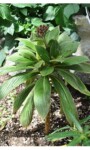
Edward Blackburn resided at the country house known as Mon Plaisir in Pamplemousses and in that delightful rural setting he naturally enough interested himself in botany, becoming a member of the Natural History Society, and its President between 1833 and 1835. He collaborated with the celebrated naturalist Wenceslaus Bojeer and made particular collections of the flora of the remote island of Agalega.  Specimens from Madagascar, Mauritius and Seychelles collected by him are still retained at the library of the world-famous Kew Gardens in London, England.

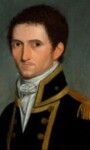
Blackburn’s portrait was painted by the artist Lysis Lemaire:

After eight years serving the judiciary of Mauritius, Blackburn returned to England. In his honour, Bojer named an endemic plant of the Mascarenes, Trochetia blackburniana after him.

The Blackburns on Mauritius today descend not from the judge but chiefly from an earlier unrelated arrival named William George Blackburn, who arrived with the conquering British forces in late 1810.  Of these one of the most interesting is Thomas Blackburn [1916-1977], the son of Mauritius-born Charles Eliel Blackburn. Thomas became a poet and a novelist. He wrote about his difficult childhood as the son of a puritanical clergyman, and about the family history. His works relate that his ancestor from 1810, who married and settled on the island, produced four sons. From their complex, inter-ethnic relations, new branches of the family developed.

The issues which interested Thomas about his childhood – in which wild nature and black magic compete for space with tales of watchful enforced chastity – have been taken up by his daughter JULIA BLACKBURN [whose novel Book of Colour is reviewed on our book page]. She has described in frank detail her reminiscences of a father who was both an inspiration for her writing and a man whose descent into a drug and alcohol-fuelled madness frightened her as a child.  Julia’s mother, the painter Rosalie de Meric, has also been a source for her writing.

JULIA BLACKBURN

There is a Blackburn family still resident on Mauritus today, of whom the spectacularly beautiful INGRID BLACKBURN is a fitting figurehead for the joys of ethnic diversity. Ingrid took part in the Miss Mauritius beauty contest in 1998 and was elected ‘Miss Mauritius People’s Choice’. Since then this elegant dance teacher has become a familiar figure in local theatre productions. In 2005 she took on the role of Carmen in a production at the Café du Vieux Conseil in Port Louis. She is pictured below.

If you are researching the Blackburn family in Mauritius and have information that you would like to add to this page, or a query that you would like to circulate, please contact us via Facebook or at info@mauritiusmag.com and we will add your comment below.

—————————————————————————————————————————————————

© www.mauritiusmag.com


 Page 1 of 6  1  2  3  4  5 » ...  Last »